
The Waka Campa Fleet: One HiAce at Three Ages, and the Outrider
4
Models in the fleet
3–4
Sleeps
0
Unsealed roads OK
1
With Webasto heater
Waka Campa rents four campervans. Three are built the same way: a high-top Toyota HiAce with a fibreglass pod over the cab, a double bed inside that pod, a dinette below that folds into a second double, a galley along the offside and a fixed flush toilet in a cubicle at the rear. Six belted seats, three in the cab and three behind. Four adults and one child. The fourth, the Outrider, is a different vehicle altogether: a 2026 LDV Deliver 9 for up to three adults, with a fixed rear double, an indoor cold shower and a diesel heater.
The three Explorer model pages on wakacampa.com are, word for word, the same page. Same description, same equipment list, same forty-item amenity grid, same 2.05-metre interior height. Only two chips move: the year of the van, and the year of the interior fit-out. Explorer Neo is a 2025-or-newer van with the current fit-out; Explorer is a 2018–2019 van with that same current fit-out; Explorer Saver is a 2013–2015 van with the original 2018 fit-out. That is the whole difference, and it is worth knowing before you pay for the top tier.
It is not nothing, though. The two fit-out generations look and work differently, and the photographs below show it: the 2025 build is laminated cabinetry with closed overhead lockers, a moulded toilet cubicle and a printed splashback; the 2018 build is varnished plywood with open cubby shelving and a fabric curtain across the toilet corner. The cooker, the sink, the fridge and both beds are the same in each. What none of the three Explorers has is heating you can run away from a powered site or a shower indoors; the Outrider has both, and seats and sleeps three rather than four. None of the four is cleared to leave the seal.
Every Waka Campa camper, side by side
Tap a model name to jump to its photos, video and full spec sheet. Scroll the table sideways on a phone — the model column stays put.
| Model | Base vehicle | Seats | Sleeps | Gearbox | Drive | Fuel | Unsealed roads OK | Night heating | Rented | Bed |
|---|---|---|---|---|---|---|---|---|---|---|
| Explorer Neo | Toyota HiAce high-top (2025 or newer) | 6 | 4 | Automatic | 2WD | Petrol | No | Hookup only | All year | 2 × 180 × 130 cm |
| Explorer | Toyota HiAce high-top (2018–2019) | 6 | 4 | Automatic | 2WD | Petrol | No | Hookup only | All year | 2 × 180 × 130 cm |
| Explorer Saver | Toyota HiAce high-top (2013–2015) | 6 | 4 | Automatic | 2WD | Petrol | No | Hookup only | All year | 2 × 180 × 130 cm |
| Outrider | LDV Deliver 9 high-roof (2026) | 3 | 3 | Automatic | 2WD | Diesel | No | Webasto | All year | 195 × 140 cm, 170 × 80 cm |
Waka Campa does not publish a drivetrain for the three Explorers. None is four-wheel drive, and the rental contract keeps all of them on sealed roads, so the column reads 2WD rather than guessing between rear and front. The Outrider's page says it is rear-wheel drive. Dimensions and bed sizes come from the Explorer and Explorer Saver spec sheets (December 2024). The FAQ centre gives a different overall size — 5 m × 2.70 m × 1.90 m against the sheets' 4.70 × 2.65 × 1.70 — and a different fuel figure. Where they disagree, both numbers are printed above rather than averaged. The Explorer Neo has no spec sheet of its own. Its bed sizes, dimensions and tank capacities are carried across from the Explorer, whose 2025 fit-out it shares; its van year comes from the booking system. Confirm anything load-bearing with the company. Both spec sheets are dated December 2024 and still describe the 2024 self-containment rules; the model pages have since been reworded to 2025. The vehicles are listed as green-warrant certified either way — the certification rental vehicles have needed since 7 December 2024, and every vehicle since 7 June 2026. The Outrider has no published dimensions, tank figure other than 80 L of fresh water, or consumption figure; its page gives the base vehicle, bed sizes and internal height. The booking API describes it as a 2026 van with a 2026 fit-out and a minimum driver age of 21.
Current fit-out
The 2025 interior: laminated cabinetry with edge banding, closed overhead lockers, a moulded white toilet cubicle behind a curtain, printed New Zealand splashbacks and a labelled 12 V switch panel. Two tiers carry it, and they differ from each other only in the age of the van underneath.
Explorer Neo
The newest van under an identical interior
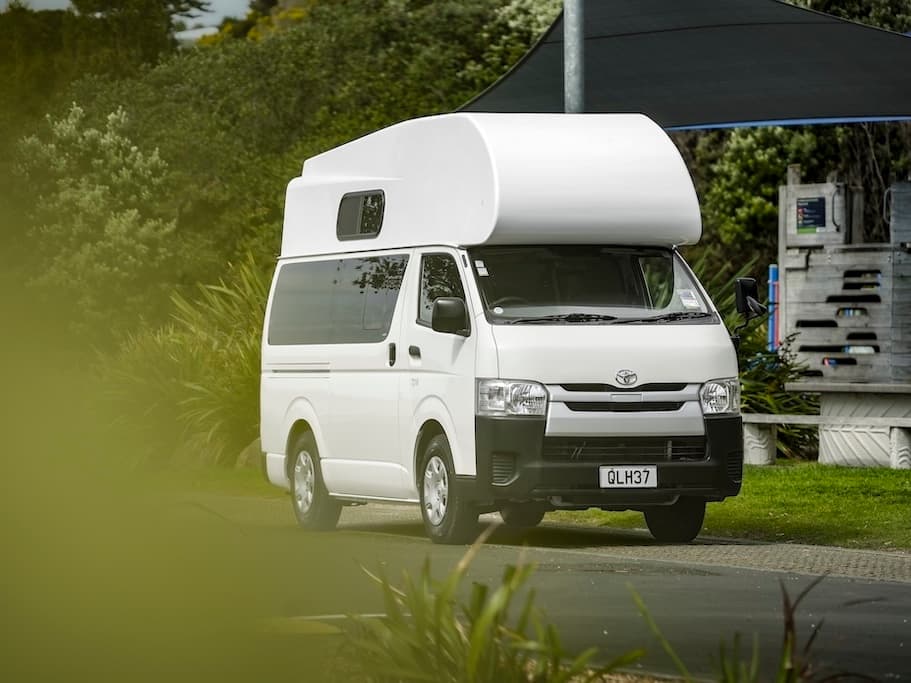
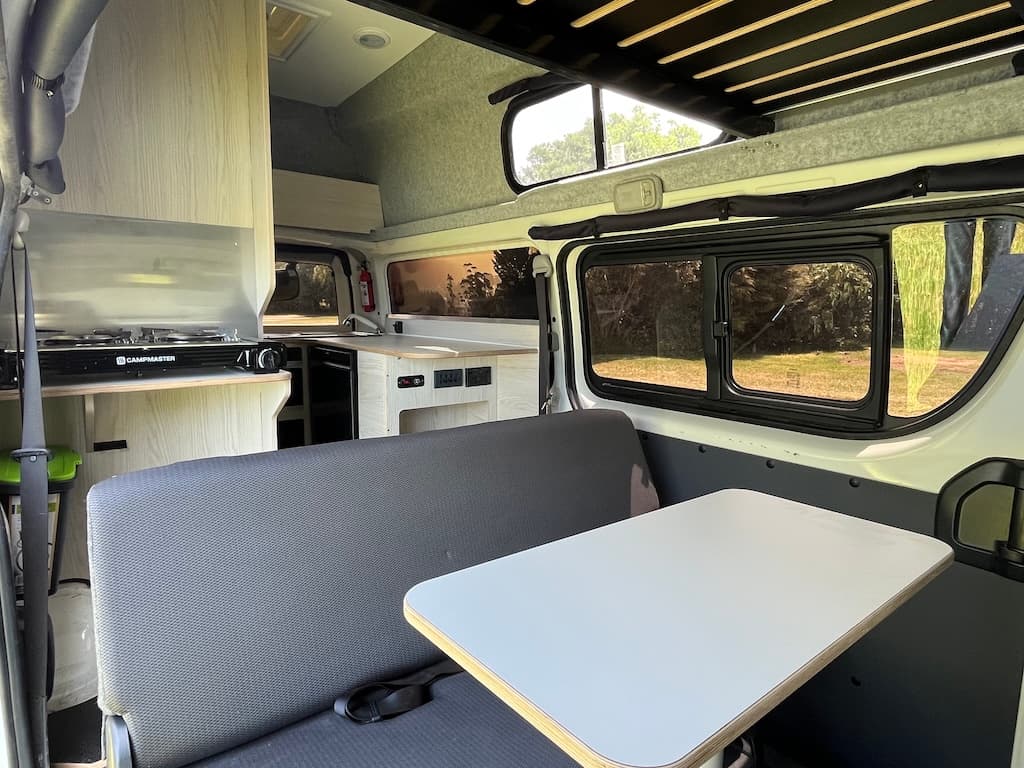
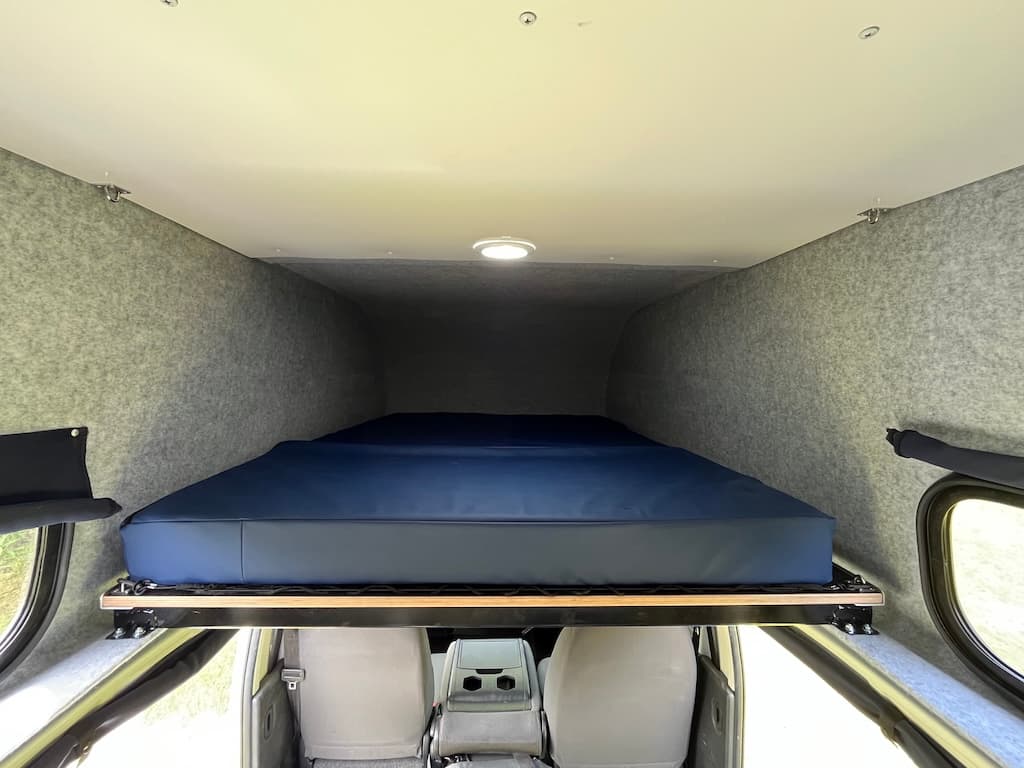
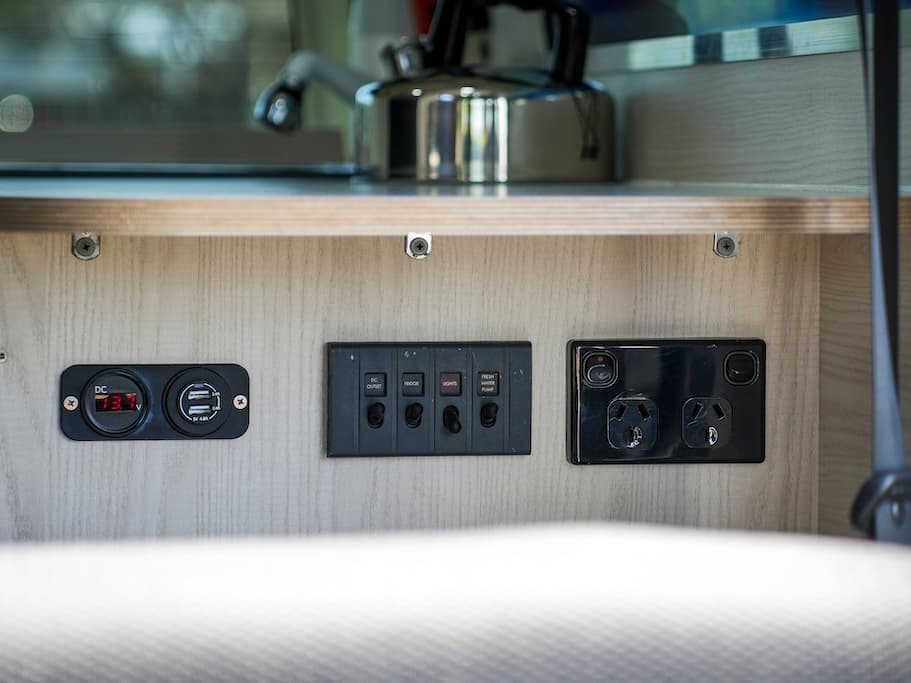
Waka Campa's own Explorer Neo photography — the same shoot it publishes on the Explorer page.
The top tier, and the one Waka Campa documents least. The booking system dates it as a 2025 van with a 2025 fit-out; the model page adds an interior height of 2.05 metres and nothing else that the other two pages do not also claim. There is no Explorer Neo spec sheet, and the photographs on its page are the Explorer's — the same November 2024 shoot of a 2018-plate van. What you are buying, on the vendor's own account, is a newer chassis and lower odometer under the same cabinetry, the same beds and the same 60-litre fridge.
- Newest chassis in the fleet
- Current 2025 fit-out
- Self-contained
- Base vehicle
- Toyota HiAce high-top, 2025 or newer
- Seats / sleeps
- 6 / 4
- Bed
- 2 × 180 × 130 cm
- Gearbox
- Automatic
- Drive
- 2WD · Petrol
- Length
- 4.70 m
- Unsealed roads OK
- Not allowed
- Night heating
- Electric, campsite hookup only
- Rental season
- Year-round
- Luggage
- Soft bags — no case count published
- Min. driver age
- 21
Best for
Travellers who would rather pay for the freshest vehicle in a small fleet than for a bigger one, and who want the lowest-mileage van available at all three airports.
Watch out
Waka Campa publishes no separate spec sheet, no separate photography and no separate FAQ entry for this tier — its own FAQ centre still lists two models, not three. Everything below the van year is inferred from the Explorer, which shares the fit-out. Ask the company to confirm the exact vehicle before paying the premium over the Explorer.
Full equipment list (25)
- Fixed flush toilet, cassette emptied from outside
- Certified self-contained (green warrant)
- 60 L fridge/freezer, 12 V and 230 V
- Two-burner portable gas stove
- Two gas canisters included
- Stainless sink with drainer
- 50 L fresh water tank
- 50 L grey water tank
- Outdoor shower off the kitchen tap
- Solar shower bag, about 20 L
- 150 W roof solar panel
- House battery, separate from the starting battery
- 230 V sockets, campground hookup
- Dual USB charging
- Driver's cab air-conditioning
- Portable 230 V heater in colder months
- Pots, pans, kettle, coffee plunger
- Crockery and cutlery sets
- Dish brush and tea towels
- Bed linen and pillows
- Outdoor table and two chairs
- Fire extinguisher and first aid kit
- Radio
- AA roadside assistance
- Unlimited kilometres
Explorer
The documented one, and the fleet's centre of gravity
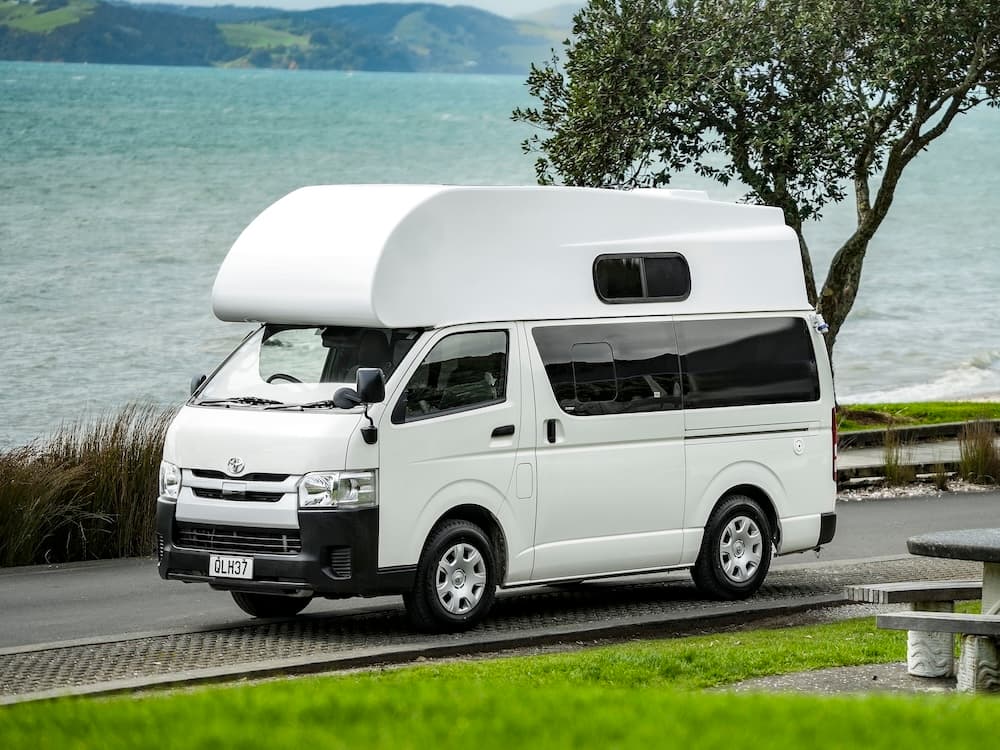
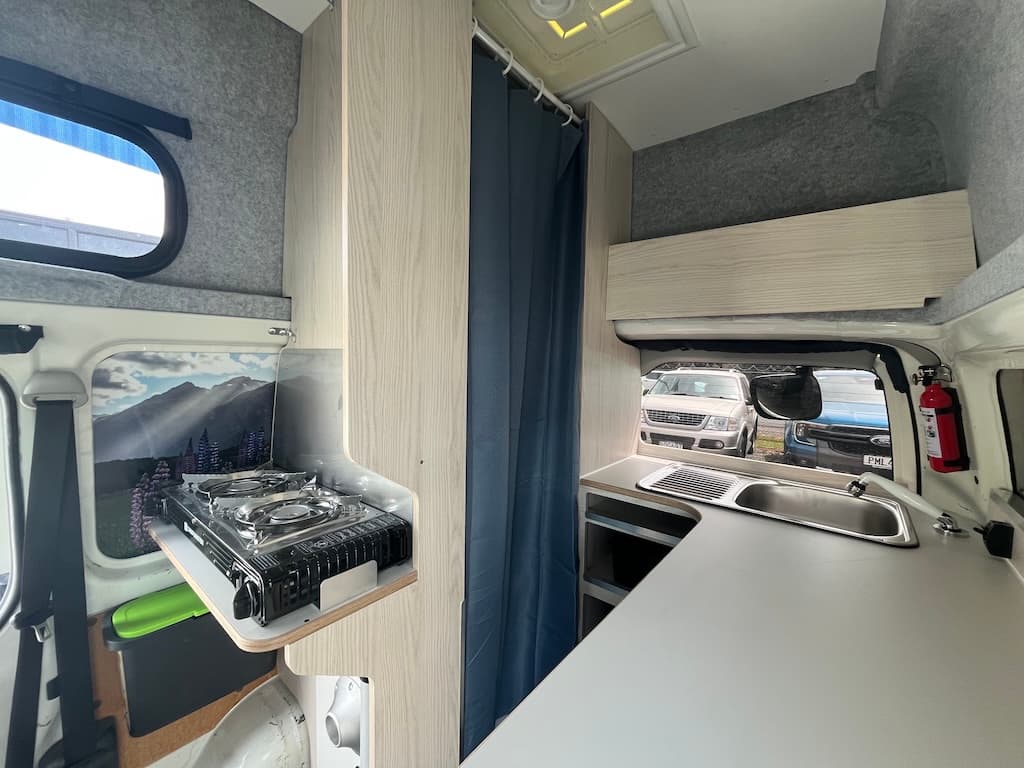
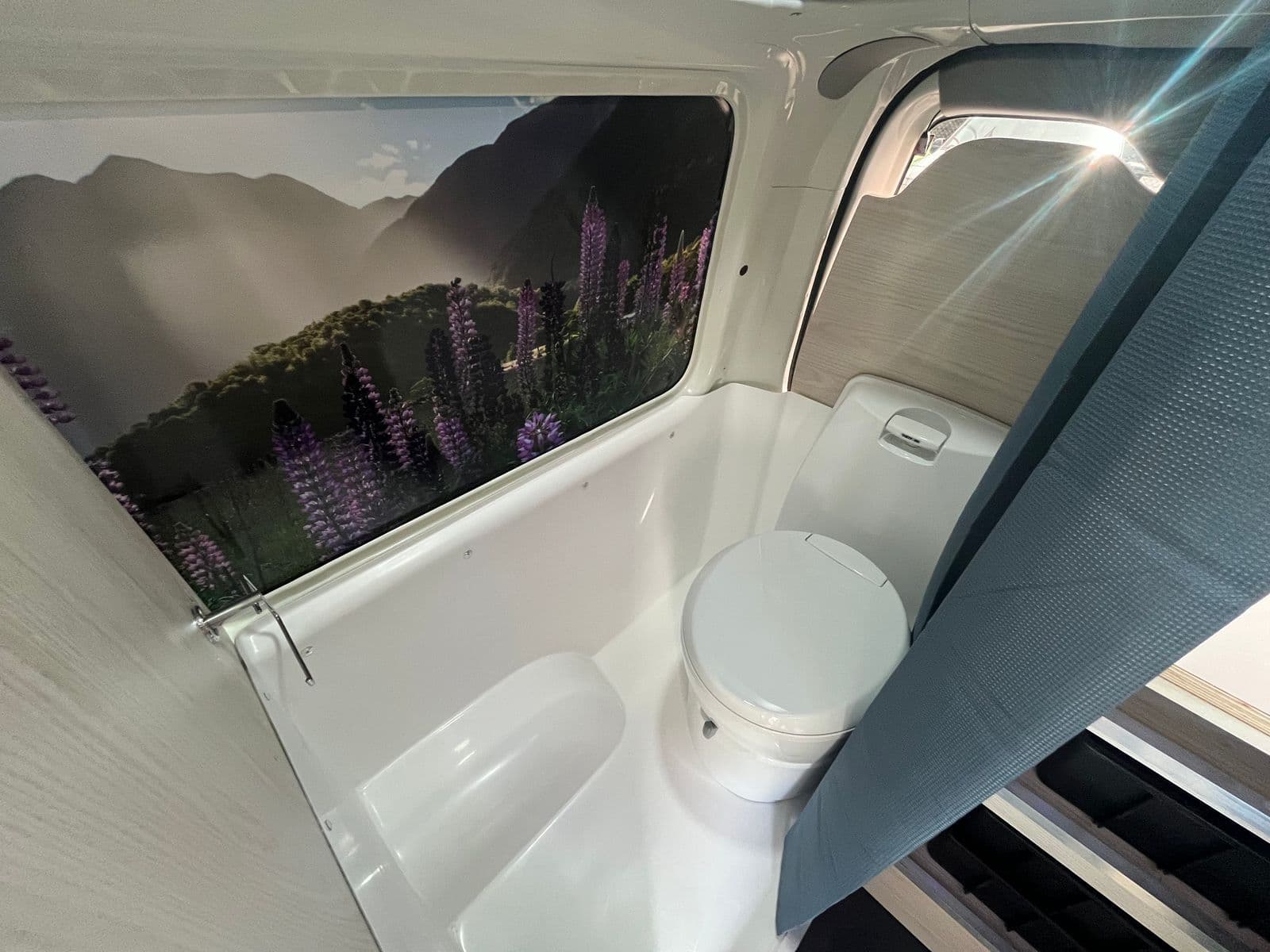
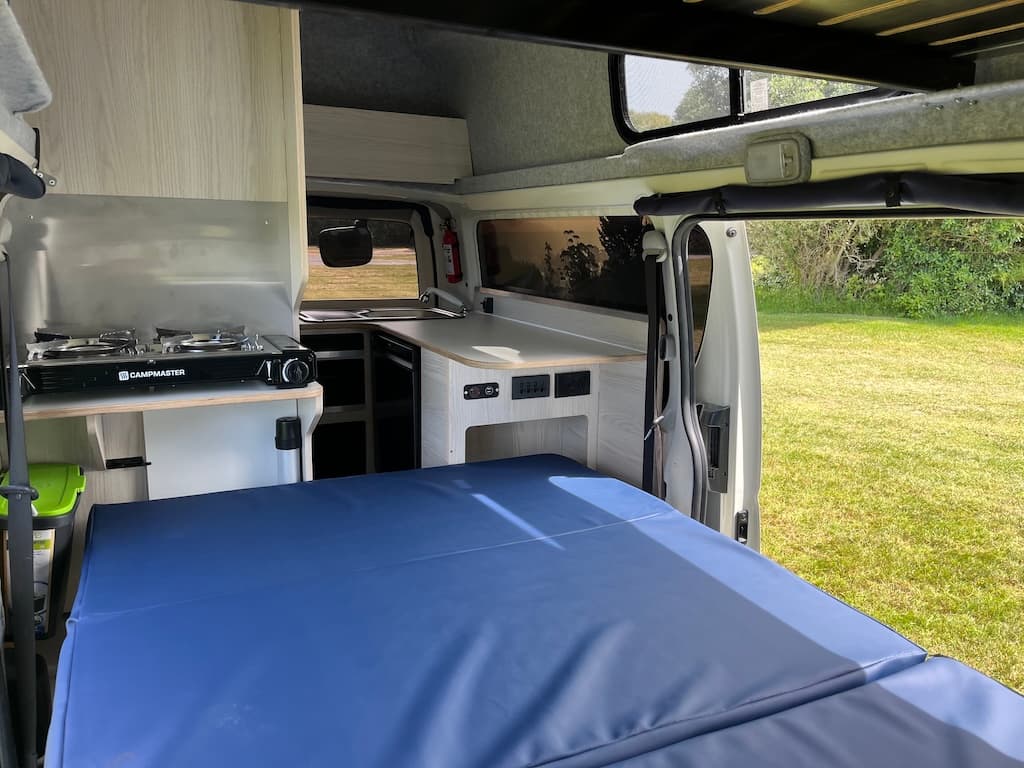
The 2018–2019 HiAce: high roof, and a pod over the cab holding the upper bed.
The tier Waka Campa actually publishes: a 2.0-litre four-cylinder petrol HiAce of 2018–2019, automatic, rebuilt inside in 2025. It is the only model with both a spec sheet and a walkthrough video, and every hard figure on this page — 4.70 metres long, 2.65 high, 50 litres of fresh water and 50 of grey, a 60-litre fridge that runs on 12 V or mains — is transcribed from its sheet. Same interior as the Neo, an older chassis, and the model the company puts in front of you first.
- Only tier with a spec sheet
- Only tier with a walkthrough video
- 2025 fit-out
- Self-contained
- Base vehicle
- Toyota HiAce high-top, 2018–2019
- Seats / sleeps
- 6 / 4
- Bed
- 2 × 180 × 130 cm
- Gearbox
- Automatic
- Drive
- 2WD · Petrol
- Length
- 4.70 m
- Unsealed roads OK
- Not allowed
- Night heating
- Electric, campsite hookup only
- Rental season
- Year-round
- Luggage
- Soft bags — no case count published
- Min. driver age
- 21
Best for
Two to four people who want the current interior without paying for the newest plate, and anyone who would rather book the one model whose specifications are written down.
Watch out
The published figures do not agree with each other. The spec sheet says 4.70 m long and 10–14 L/100 km; the FAQ centre says 5 m and 8–12 L/100 km. Budget fuel at the higher figure and measure ferry and parking clearances against the taller number.
Full equipment list (25)
- Fixed flush toilet, cassette emptied from outside
- Certified self-contained (green warrant)
- 60 L fridge/freezer, 12 V and 230 V
- Two-burner portable gas stove
- Two gas canisters included
- Stainless sink with drainer
- 50 L fresh water tank
- 50 L grey water tank
- Outdoor shower off the kitchen tap
- Solar shower bag, about 20 L
- 150 W roof solar panel
- House battery, separate from the starting battery
- 230 V sockets, campground hookup
- Dual USB charging
- Driver's cab air-conditioning
- Portable 230 V heater in colder months
- Pots, pans, kettle, coffee plunger
- Crockery and cutlery sets
- Dish brush and tea towels
- Bed linen and pillows
- Outdoor table and two chairs
- Fire extinguisher and first aid kit
- Radio
- AA roadside assistance
- Unlimited kilometres
Original fit-out
The 2018 interior on the oldest vans: varnished plywood joinery, open cubby shelving instead of doors, and a striped fabric curtain across the toilet and sink corner. Same beds, same cooker, same 60-litre fridge, same certification — visibly more workshop-built, and the cheapest way into a self-contained camper here.
Explorer Saver
The oldest van and the original plywood build
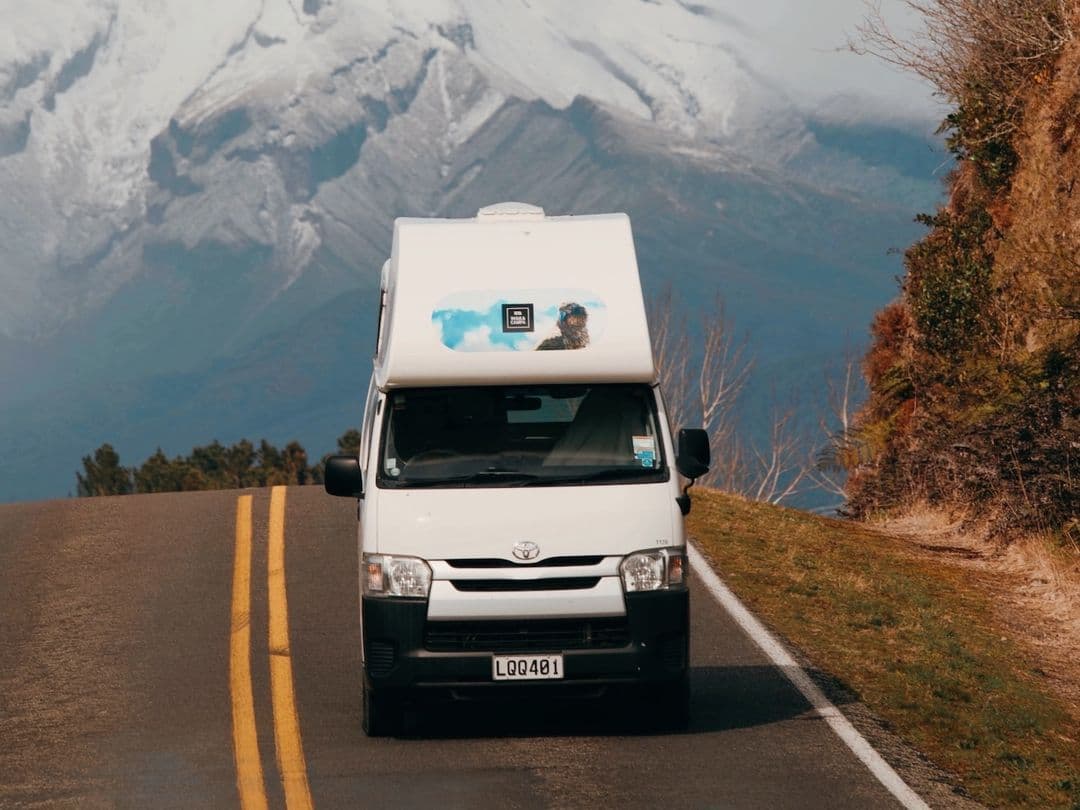
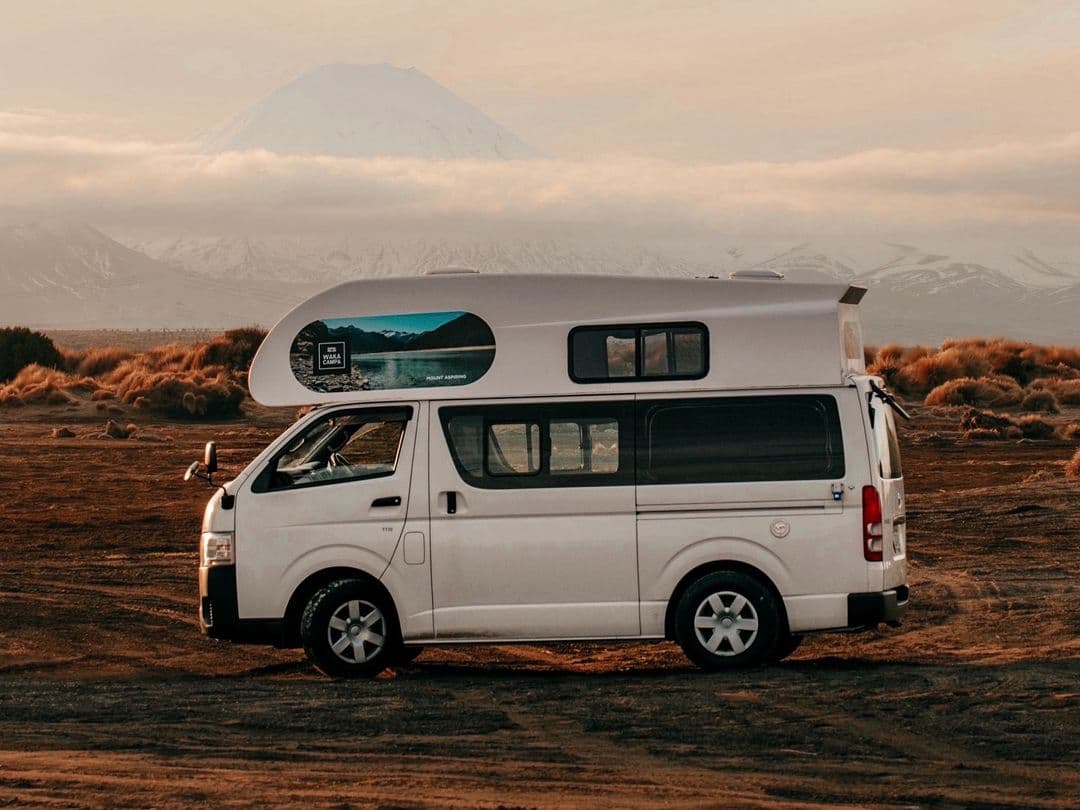
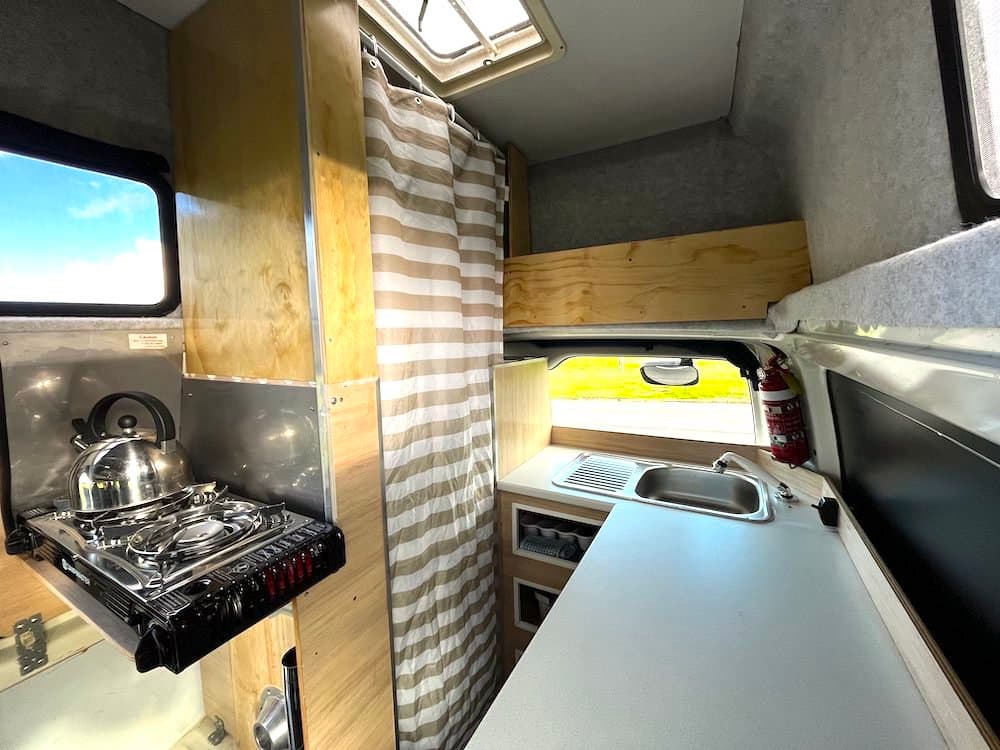
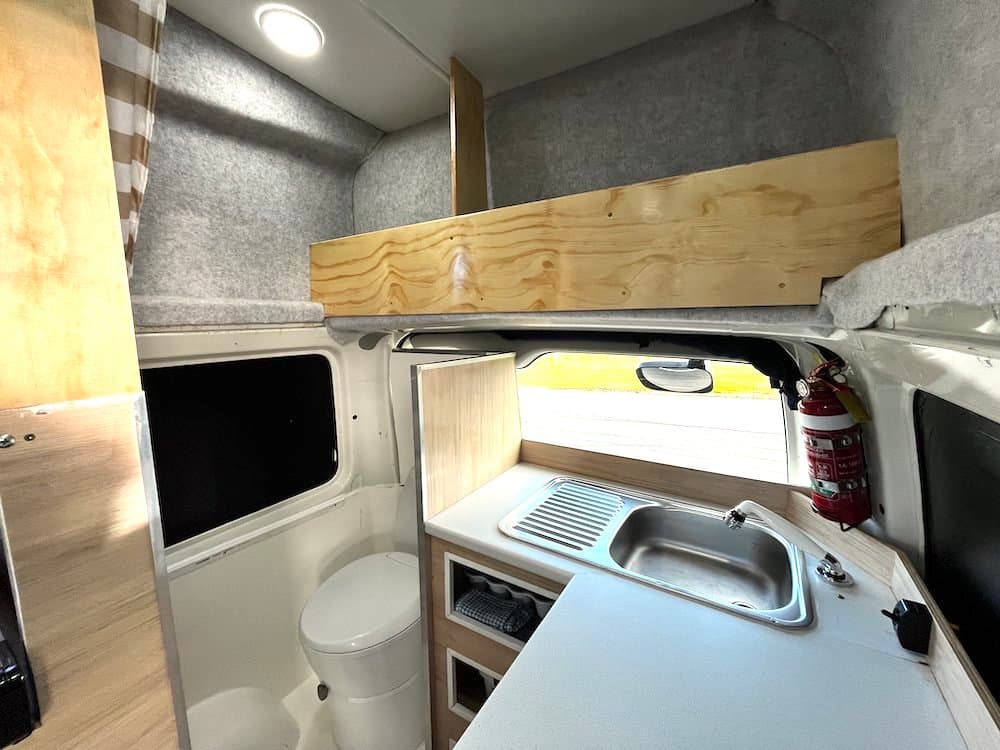
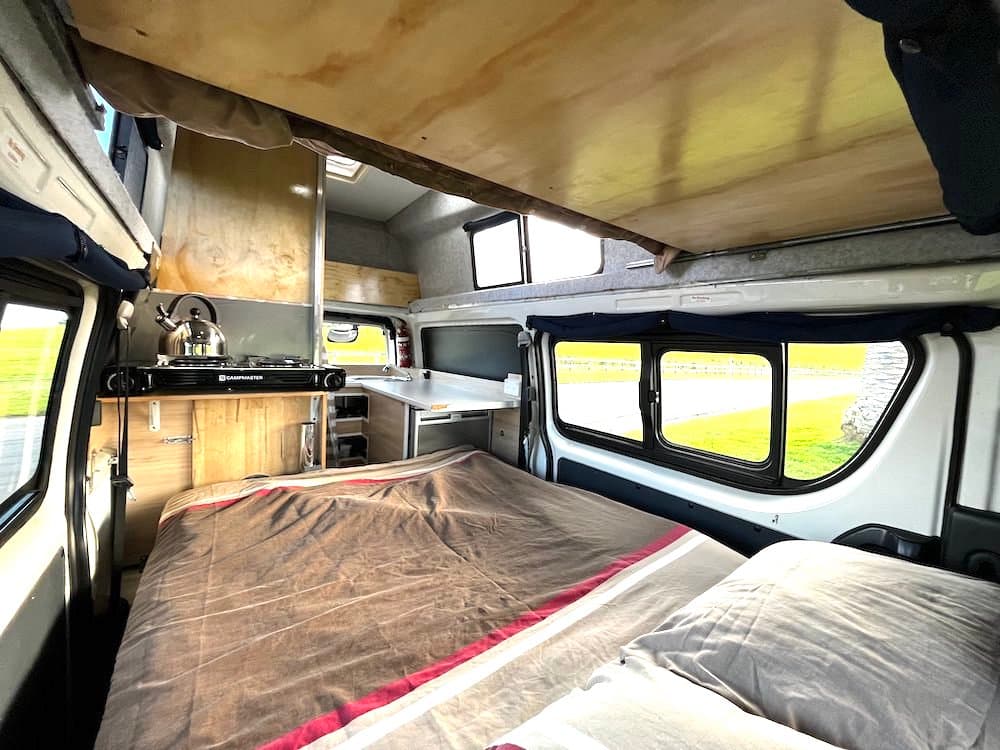
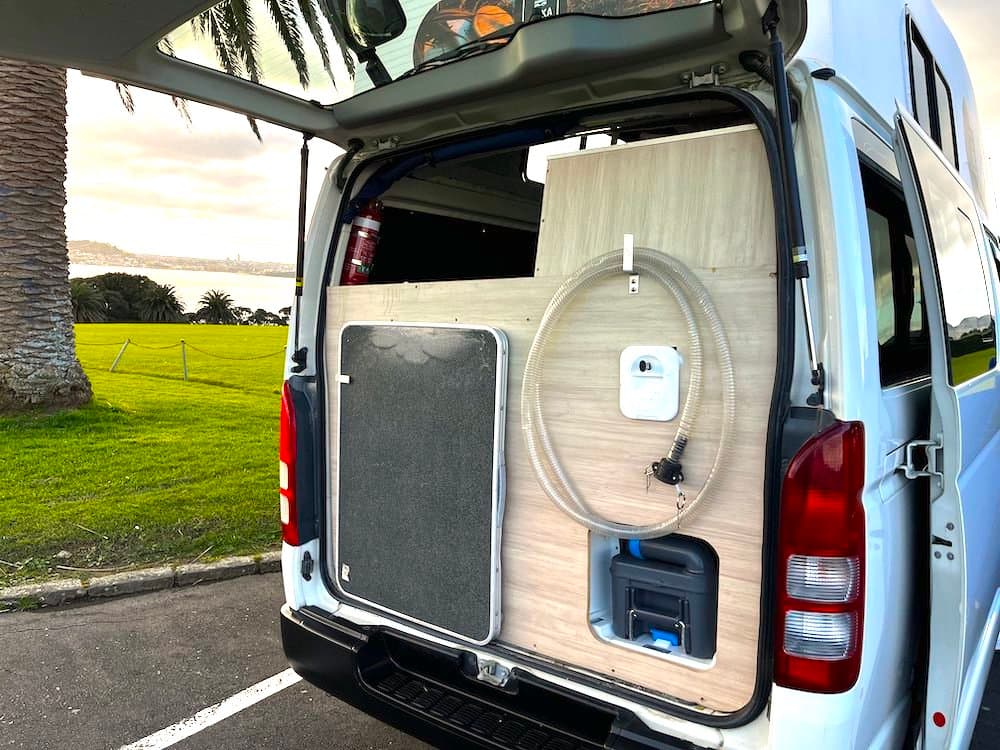
Same silhouette as the newer tiers — the difference is inside.
The budget tier: a 2.0-litre petrol HiAce from 2013–2015, automatic, fitted out in 2018 and left that way. Its spec sheet is line-for-line identical to the Explorer's — same beds at 180 × 130 cm, same 60-litre fridge, same 50-litre tanks, same certification — and the photographs show where the money went instead. Varnished plywood joinery, open cubby shelves rather than closed lockers, the cooker on a hinged plywood flap, and a striped curtain drawn across the toilet and sink corner.
- Cheapest tier
- Same beds and tanks
- Self-contained
- Base vehicle
- Toyota HiAce high-top, 2013–2015
- Seats / sleeps
- 6 / 4
- Bed
- 2 × 180 × 130 cm
- Gearbox
- Automatic
- Drive
- 2WD · Petrol
- Length
- 4.70 m
- Unsealed roads OK
- Not allowed
- Night heating
- Electric, campsite hookup only
- Rental season
- Year-round
- Luggage
- Soft bags — no case count published
- Min. driver age
- 21
Best for
Anyone who wants a certified self-contained camper for the least money and does not care that the cabinetry looks built rather than moulded.
Watch out
This is a ten-to-thirteen-year-old van with a fit-out that is now eight years old, and it is the tier most likely to have accumulated wear. Waka Campa's own sources also disagree on its age: the model page says 2013–2015, the spec sheet says 2014–2015, and the booking system reports a 2014 van.
Full equipment list (25)
- Fixed flush toilet, cassette emptied from outside
- Certified self-contained (green warrant)
- 60 L fridge/freezer, 12 V and 230 V
- Two-burner portable gas stove
- Two gas canisters included
- Stainless sink with drainer
- 50 L fresh water tank
- 50 L grey water tank
- Outdoor shower off the kitchen tap
- Solar shower bag, about 20 L
- 150 W roof solar panel
- House battery, separate from the starting battery
- 230 V sockets, campground hookup
- Dual USB charging
- Driver's cab air-conditioning
- Portable 230 V heater in colder months
- Pots, pans, kettle, coffee plunger
- Crockery and cutlery sets
- Dish brush and tea towels
- Bed linen and pillows
- Outdoor table and two chairs
- Fire extinguisher and first aid kit
- Radio
- AA roadside assistance
- Unlimited kilometres
Three-berth with a diesel heater
The newest model and the only different layout: a high-roof LDV Deliver 9 with a fixed rear double over a garage, a dinette that becomes a single, a curtained wet room with a cold shower, and the fleet's only heater that runs without mains power.
Outrider
The one that heats off-grid, for up to three
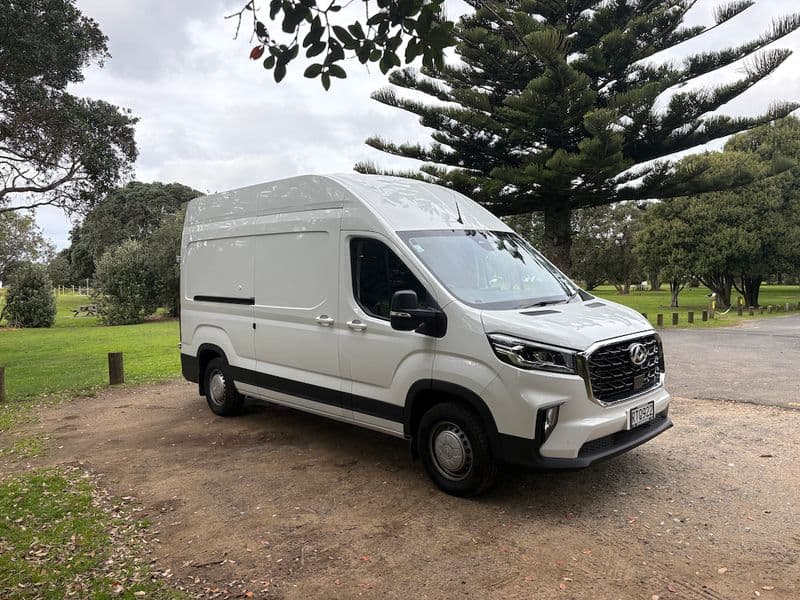
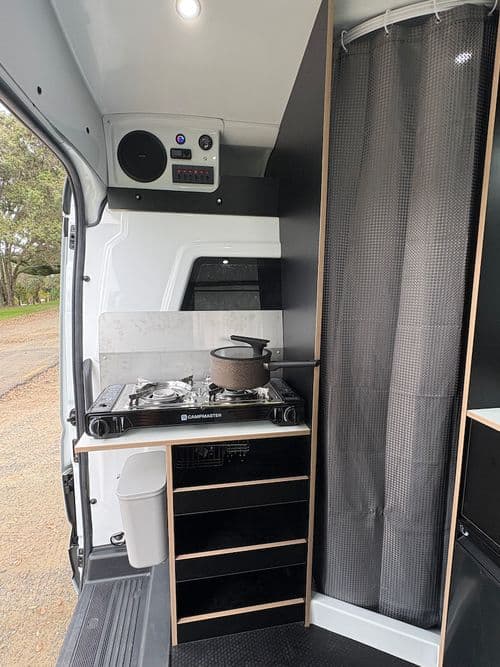
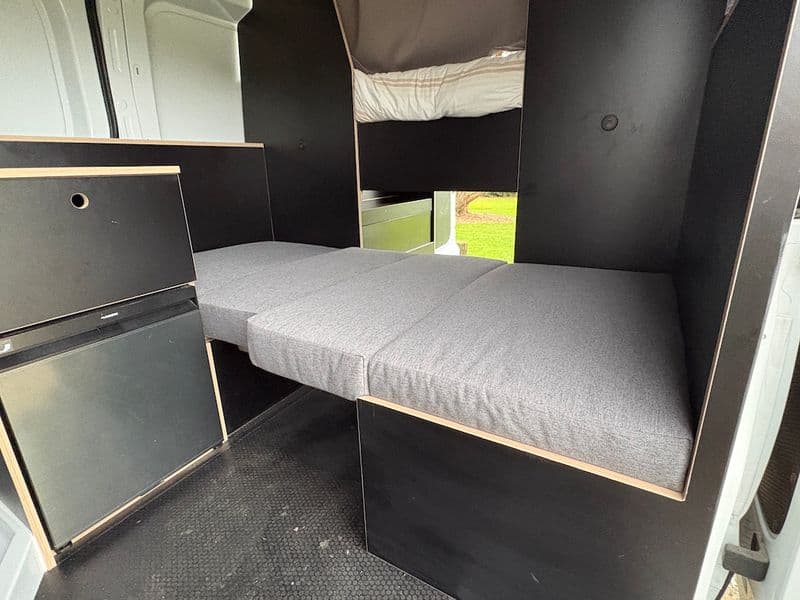
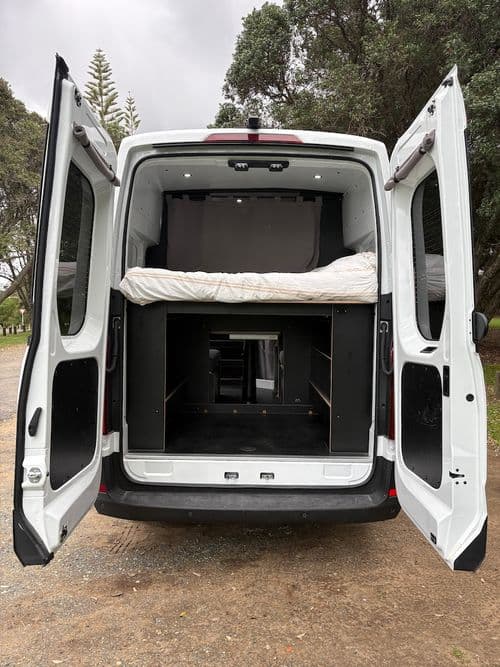
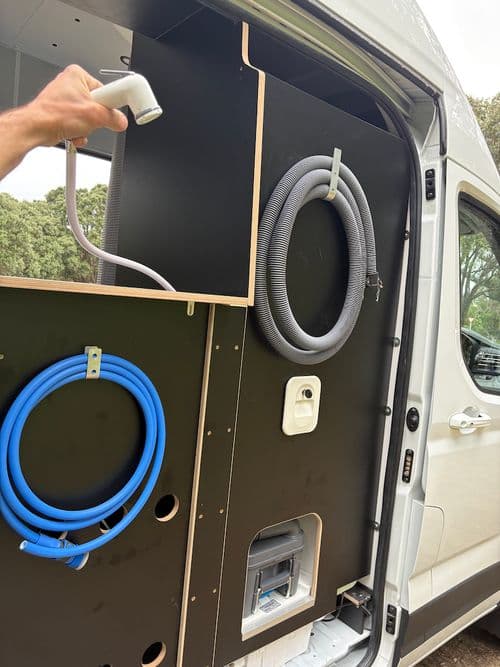
A 2026 LDV Deliver 9, the only base vehicle in the fleet that is not a HiAce.
The newest model, and the answer to the rest of the fleet's two gaps. A brand-new LDV Deliver 9, rear-wheel drive with a 2.0-litre turbo diesel and an automatic gearbox, with 2 metres of internal height. The rear double, 1.95 × 1.40 m, is fixed above a garage big enough for adult bikes and surfboards; the dinette table makes a 1.70 × 0.80 m single. Behind a curtain is a wet room with a fixed flush toilet and a cold shower with a tray and drain, and Waka Campa calls the diesel heater 'the only one in our fleet'. It carries 80 litres of fresh water and a solar panel, and is listed as certified self-contained under the new regulations.
- Diesel heater
- Indoor cold shower
- Fixed rear double
- Self-contained
- Base vehicle
- LDV Deliver 9 high-roof, 2026
- Seats / sleeps
- 3 / 3
- Bed
- 195 × 140 cm, 170 × 80 cm
- Gearbox
- Automatic
- Drive
- 2WD · Diesel
- Unsealed roads OK
- Not allowed
- Night heating
- Webasto, runs engine-off
- Rental season
- Year-round
- Luggage
- Rear garage under the bed, sized for bikes and surfboards
- Min. driver age
- 21
Best for
Two or three adults travelling outside high summer who want to freedom camp without losing heat, or who want to rinse off indoors rather than behind the van.
Watch out
It seats and sleeps three, not four, and the shower is cold. As a diesel it attracts Road User Charges, which Waka Campa prepays at booking on 200 km a day and settles against the odometer on return. The cooker in the photographs is a portable two-burner gas unit on the counter, as in the Explorers.
Full equipment list (25)
- Fixed flush toilet
- Indoor cold shower with tray, drain and curtain
- Solar shower
- Certified self-contained, per the company
- Diesel heater
- Fixed rear double bed
- Dinette that converts to a single bed
- Two-burner gas stove
- Fridge/freezer
- Kitchen sink
- 80 L fresh water
- Grey water tank
- Roof solar panel
- House battery, separate from the starting battery
- 240 V sockets, campground hookup
- USB sockets
- Air conditioning
- Reversing camera and lane assist
- Touchscreen with Apple CarPlay and Android Auto
- Bluetooth stereo
- Pots, pans, kettle, coffee plunger, crockery and cutlery
- Bed linen and pillows
- Camping table and chairs
- Fire extinguisher and first aid kit
- Unlimited kilometres
Fleet questions
How many campervans does Waka Campa actually rent?
What is the actual difference between the three Explorer tiers?
Can I heat the van without a powered campsite?
Is there a shower?
Are they all certified self-contained?
How big are the beds?
Can I take one onto a gravel road?
How much fuel will one use?
How old do I have to be to drive one?
Which model should I book for a winter trip?
Specifications transcribed from Waka Campa's own model pages and FAQ centre, the Explorer and Explorer Saver spec sheets (Canva PDFs dated December 2024), the Outrider page (read 17 September 2026), and the live booking API, last checked 17 September 2026. Fleets change: model years roll over, equipment gets swapped, and individual vehicles vary. Confirm anything that decides your booking with Waka Campa directly.
See what these actually cost on your dates
Waka Campa prices move with season, duration and how far ahead you book. Run one search and compare all of them against every other New Zealand camper company at once.
Search live prices